Start here
26 minutesWhat the category is, why description is not enough, and where the gap sits in a real stack.
24 open publications — the specification, the arguments behind it, and the instruments for applying it. Every one is readable in full on this site and downloadable in the formats it exists in. All CC BY 4.0.
Start with a sequenceEach path is three or four documents in a stated order, with the reason for that order.
What the category is, why description is not enough, and where the gap sits in a real stack.
Why observability cannot close the gap, and what has to exist instead.
The same argument against three categories you have already bought.
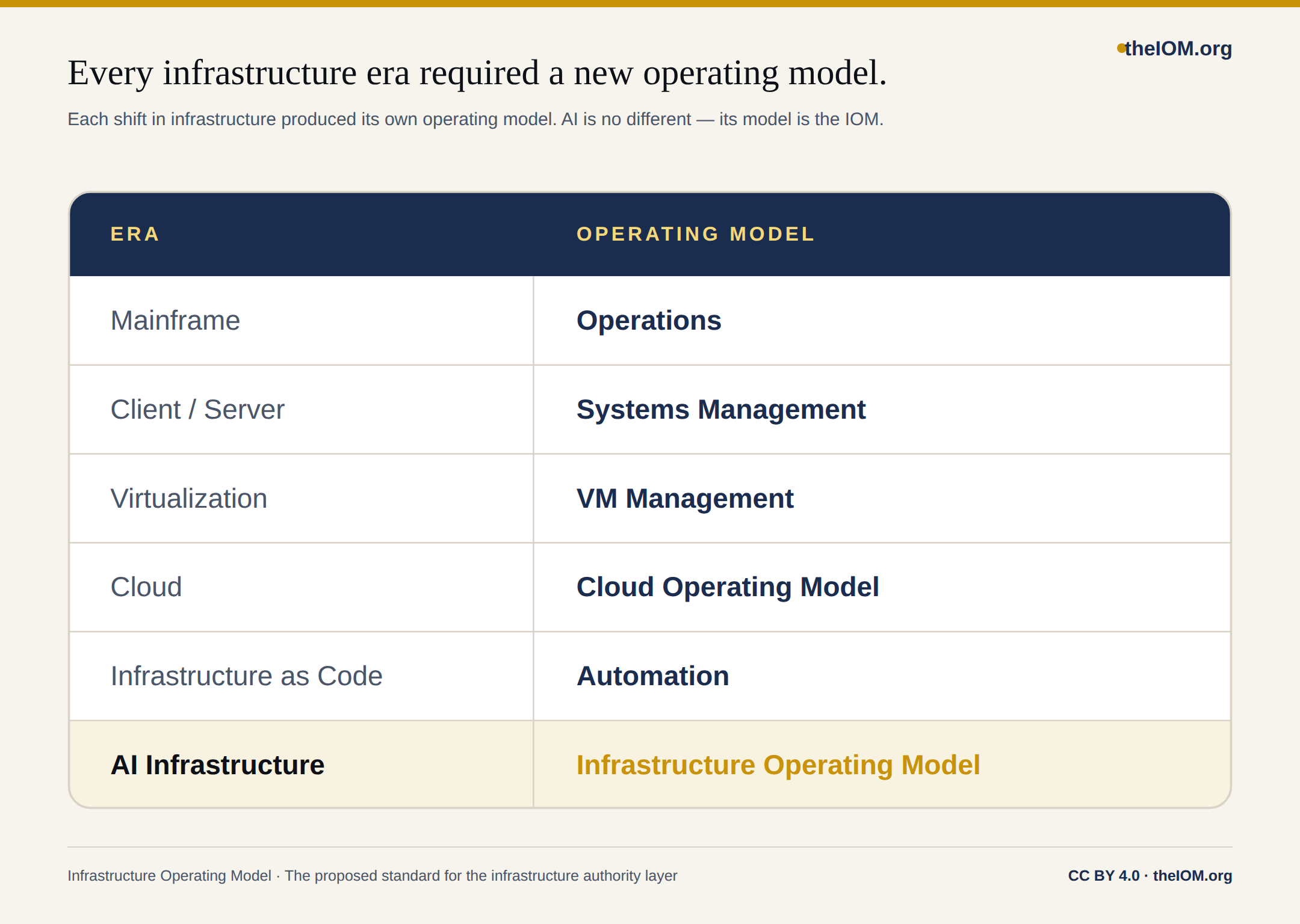
The category thesis, its normative definition, and the two failure modes it names.
A vendor-neutral specification for the infrastructure authority layer.
Read → PDF DOCXTOGAF, golden paths, and infrastructure-as-code each declare intent, and each assumes something else will hold reality to it. Nothing validates a change against any of them before it runs.
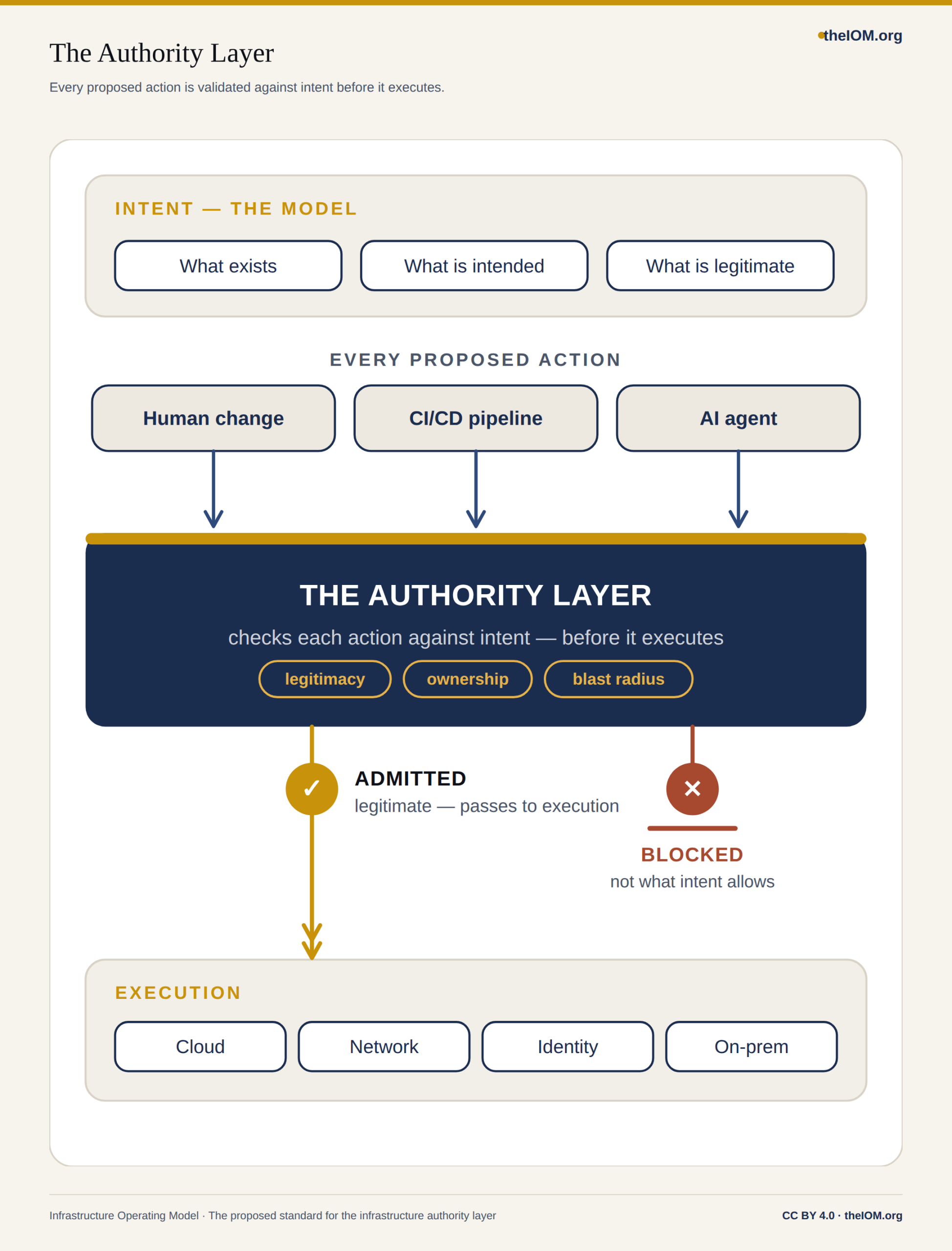
Read → PDF DOCXOperations infer intent from telemetry after the fact. Model Inversion reverses the direction, making an authoritative model the first input rather than the last conclusion.
Read → PDF DOCXDiscovery, CMDBs, and telemetry each record what is. No amount of integration turns a description of the estate into a statement of what is allowed.
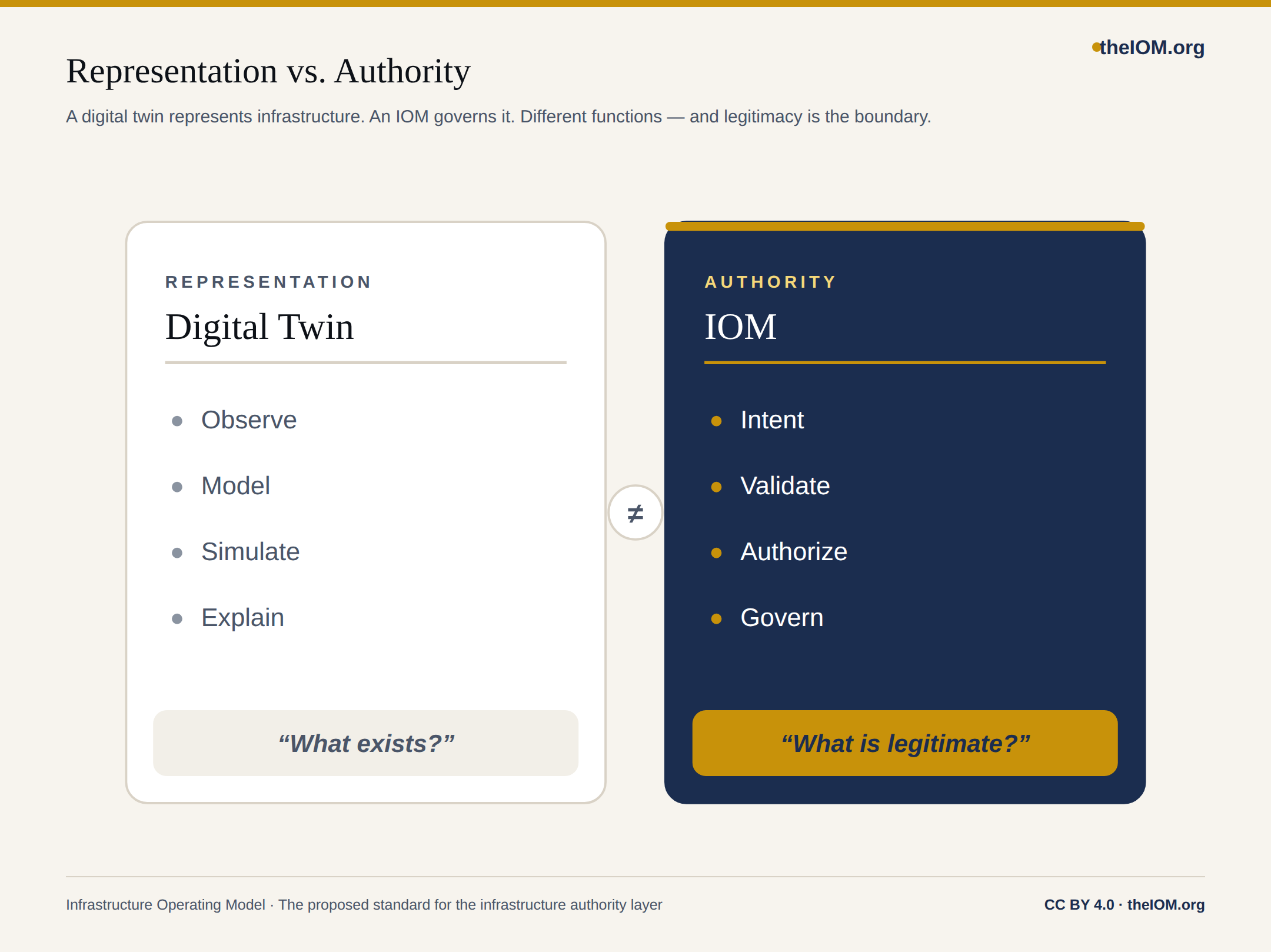
Read → PDF DOCXDigital twins represent infrastructure; an Infrastructure Operating Model governs it. Why legitimacy — not fidelity — is the category boundary.
Read → PDFAI-driven infrastructure stalls for structural reasons, not algorithmic ones. AI can see what exists, not what is legitimate — and autonomy needs legitimacy.
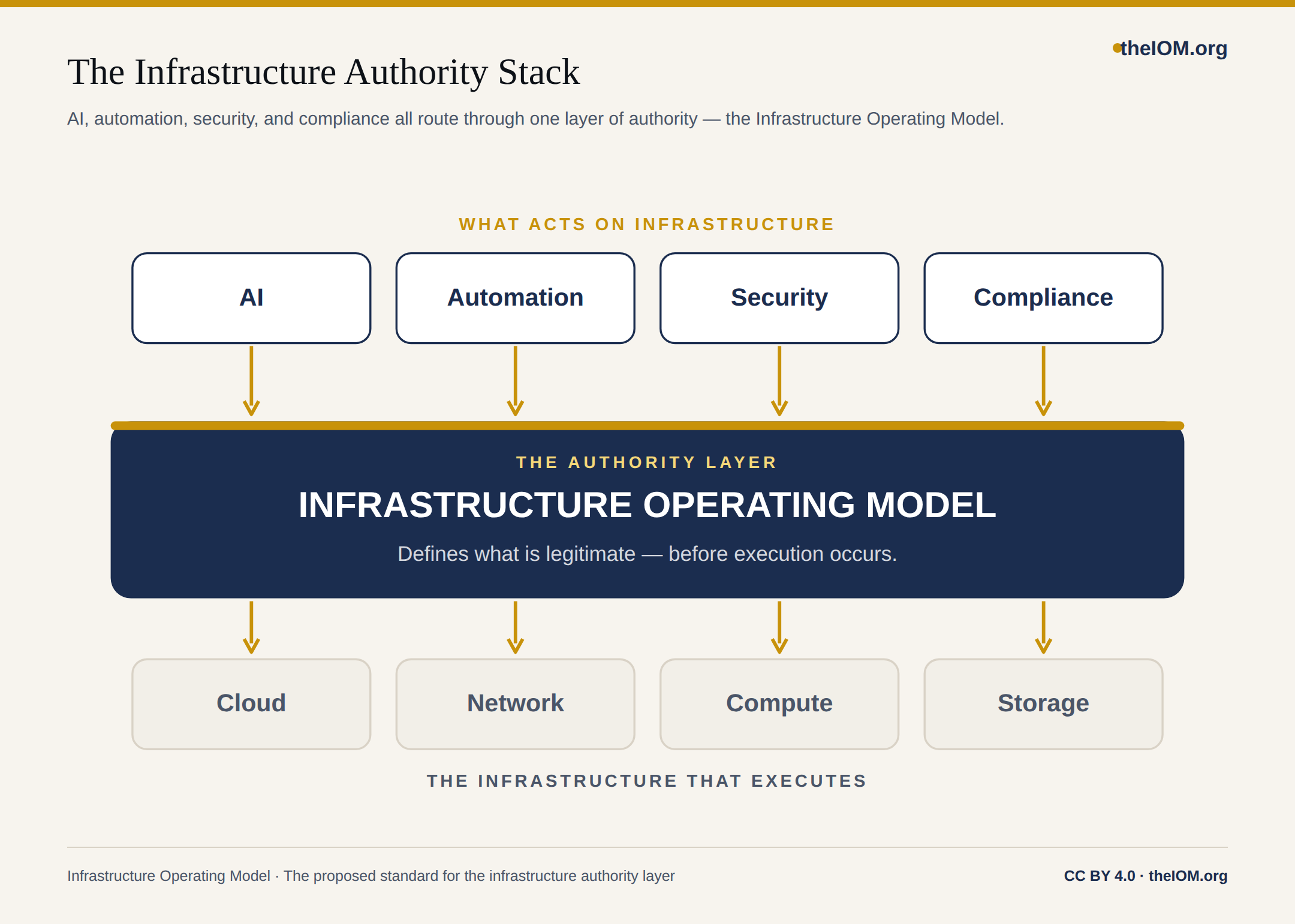
Read → PDFApproximating an IOM takes roughly a dozen platforms — but even one vendor shipping all twelve would not produce one. Authority is not an integration construct.
Read → PDFA smarter control plane improves how infrastructure executes; it cannot establish what it means, who owns it, or what it may do. Control is not authority.
Read → PDFTOGAF, Zachman, ArchiMate and SAFe describe architecture; none enforces it. Why EA needs an IOM authority layer to keep intent and reality reconciled.
Read → PDFSecurity fails on static assumptions in a changing world; posture decays between scans. Why preventive security and Zero Trust need an IOM authority layer.
Read → PDFWhat an IOM is made of and how it is adopted — a phased, low-risk path that governs existing tools before execution, without replacing them.
Read → PDFAIOps noise is not a model problem — telemetry records what happened, not what was intended. An IOM authority layer makes root cause deterministic.
Read → PDFInfrastructure as Code declares how to build; an Infrastructure Operating Model declares what is allowed — and validates the plan before it runs.
Read → PDFHow an implementation is verified against the IOM Standard: what evidence is required, how it must be demonstrated, and what a listing in the conformance directory asserts.
Read →A working document for scoring IOM readiness across six capability dimensions, mapping existing tools to requirements, and planning adoption in four phases.
Read → PDF DOCX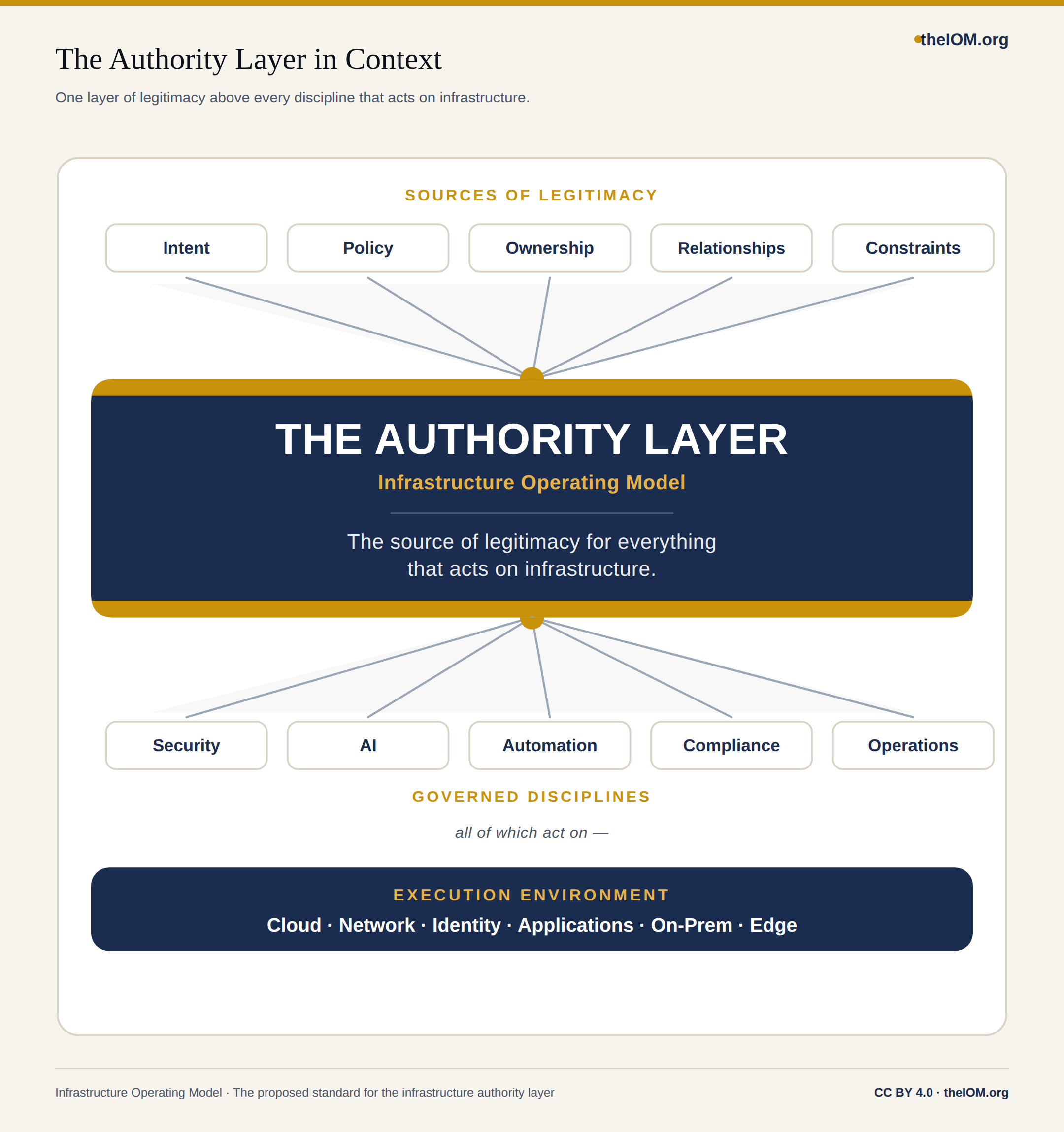
The library is also published as structured data, so it can be consulted rather than scraped: /documents/index
and /llms.txt.